TL;DR Quick Summary for 2026 Travelers
After a comprehensive four-year renovation, the Tokyo Metropolitan Edo-Tokyo Museum officially reopens on March 31, 2026. Situated in the historic Ryogoku district, this architectural landmark returns with structural upgrades and brand-new permanent displays, including full-scale recreations of the Edo-era Time Bell and the original Asakusa Hanayashiki Gate. Standard adult admission is 800 yen, with operating hours from 9:30 AM to 5:30 PM (extended to 7:30 PM on Saturdays). To bypass the expected post-reopening spring crowds, we strongly advise visiting on weekday mornings or securing a private chartered car for seamless, crowd-free transit between Ryogoku, Asakusa, and the Sumida River area.
A Long-Awaited Return: Why the 2026 Reopening Matters
For travelers who have previously walked the streets of Japan’s capital, the absence of the Edo-Tokyo Museum since its closure in April 2022 left a distinct void in the city’s cultural itinerary. As of March 31, 2026, that void is finally filled.
This reopening is far more than a superficial update. The facility has undergone a massive structural overhaul to ensure it remains a world-class institution. While much of the necessary work occurred behind the scenes—drastically improving accessibility, thermal insulation, and implementing a state-of-the-art climate control system to preserve delicate artifacts—the visible visitor experience has been masterfully revitalized.
The museum’s iconic elevated exterior, originally designed by Kiyonori Kikutake to evoke a traditional kura (storehouse), continues to dominate the Ryogoku skyline. However, the western entrance has been entirely reimagined by acclaimed architect Shohei Shigematsu. The new approach features striking, torii gate-inspired installations that beautifully bridge the spatial gap between Tokyo’s deeply spiritual past and its hyper-modern present.
What’s New Inside: 2026 Exhibit Highlights
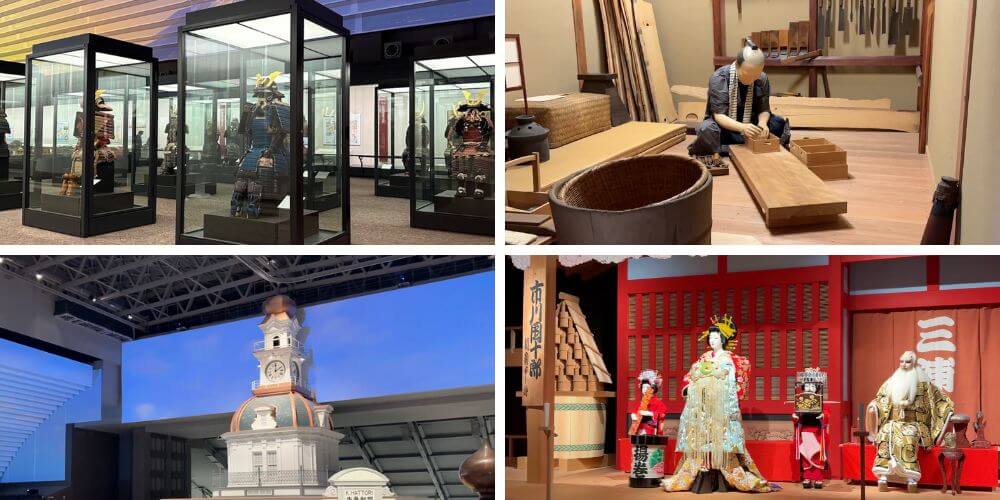
The permanent exhibition gallery, long celebrated for its life-sized, walk-across replica of the Nihonbashi Bridge, has been enhanced with several highly tactile and immersive additions. These new features offer a precise, sensory look into the evolution of the metropolis.
| New Permanent Exhibit | Detailed Description | Historical Significance |
| The Time Bell (Toki-no-kane) | A full-scale, functioning recreation of the bell that dictated the daily rhythms of Edo’s citizens. | Represents the strict precision and social order of daily life during the Edo period. |
| Asakusa Hanayashiki Gate | A meticulous architectural reconstruction of the entrance to Japan’s oldest amusement park. | Illustrates Tokyo’s cultural pivot into the Meiji era’s vibrant, burgeoning leisure culture. |
| Dojunkai Daikanyama Apartments | An immersive, detailed walk-through of early 20th-century modern apartment living. | Highlights Tokyo’s rapid modernization and resilient urban planning following the 1923 Great Kanto Earthquake. |
Curator’s Note for Spring 2026: For the first month of the reopening (April 2026), the museum is hosting a rare special exhibition featuring Utagawa Hiroshige’s “One Hundred Famous Views of Edo” in its entirety. This is a fleeting opportunity to view these globally celebrated ukiyo-e woodblock prints in the exact city that inspired them.
Beyond the Museum: Exploring the Ryogoku District
Ryogoku is frequently overlooked by visitors rushing toward the neon intersections of Shibuya or Shinjuku. Yet, in 2026, it firmly stands as Tokyo’s premier cultural hub. After absorbing the museum’s extensive archives, step outside to experience how Edo’s spirit endures in the neighborhood’s daily life.
-
Sumo Culture at Ryogoku Kokugikan: The national sumo stadium sits immediately next door. If your spring itinerary coincides with the May Grand Sumo Tournament (May 10–24, 2026), the local atmosphere is electric. The streets fill with the scent of simmering chanko nabe (the traditional sumo stew) and the sight of yukata-clad wrestlers walking between stables.
-
The Japanese Sword Museum: Just a short, scenic walk away inside the serene Kyu-Yasuda Gardens, this specialized museum offers a quiet, sophisticated look at the legendary metallurgy and artistry of the samurai class.
-
Sumida River Cruises: For a premium sightseeing transition, board a water bus from the Ryogoku pier. It’s a breezy, 15-minute aquatic commute to Asakusa, offering unimpeded, highly photogenic views of the Tokyo Skytree and the city’s historically significant bridges.
Logistics and Insider Tips for 2026
| Essential Category | 2026 Details |
| Admission Pricing | 800 yen (Adults), 400 yen (Seniors 65+). [Check official site for 2026 student/child pricing tiers]. |
| Operating Hours | 9:30 AM – 5:30 PM (Tuesday–Sunday). Extended evening hours until 7:30 PM on Saturdays. Closed Mondays. |
| Transit Access | Ryogoku Station (Toei Oedo Line, Exit A4; JR Chuo-Sobu Line, West Exit). |
| Crowd Avoidance | Tuesday or Wednesday mornings are optimal to avoid the initial, heavy spring reopening surge. |
The Milocal Advantage: Stress-Free Cultural Exploration
Navigating Tokyo’s intricate train network with a group, extensive luggage, or young children can be demanding—especially during the highly congested spring sakura season when the newly reopened Edo-Tokyo Museum will undoubtedly draw record crowds.
At Milocal Japan, we specialize in engineering flawless, “Beyond the Golden Route” travel experiences. By reserving a private chartered car, you secure a seamless day of exploration. Picture stepping out of the museum and directly into a climate-controlled, luxury vehicle, bypassing the crowded platforms of Ryogoku Station entirely.
A Must-Visit for 2026
The long-awaited return of the Edo-Tokyo Museum is a celebration of Tokyo’s relentless endurance and architectural ingenuity. Whether you are a first-time visitor discovering the samurai era or a seasoned Japan traveler returning to see the new exhibits, the 2026 experience delivers an authoritative look at how a modest fishing village transformed into the world’s most dynamic metropolis.