When it comes to hot springs in Japan, most people immediately think of Hakone or Kusatsu. But if you’re looking for the ultimate onsen experience, there’s no better place than Kyushu. This southern island of Japan is blessed with volcanic landscapes, natural hot spring water, and a unique culture of bathing that goes back centuries.
Kyushu is home to some of Japan’s most famous onsen towns, offering everything from rustic outdoor baths in the mountains to luxurious ryokan stays by the sea. Whether you’re an onsen beginner or a seasoned hot spring lover, Kyushu should be at the top of your Japan travel list.
Why Kyushu is Perfect for Hot Springs
Kyushu sits on the “Ring of Fire,” meaning it has abundant geothermal activity. That translates to thousands of natural hot springs, each with different mineral compositions and health benefits. From skin-beautifying waters to baths believed to ease muscle pain, the variety is unmatched.
Another reason? Kyushu’s onsen towns combine stunning natural scenery with deep cultural traditions. Imagine soaking in a steaming outdoor bath while gazing at Mount Aso’s volcanic peaks or relaxing in a seaside onsen where the waves crash just meters away.
Now, let’s dive into the best hot springs in Kyushu you shouldn’t miss:
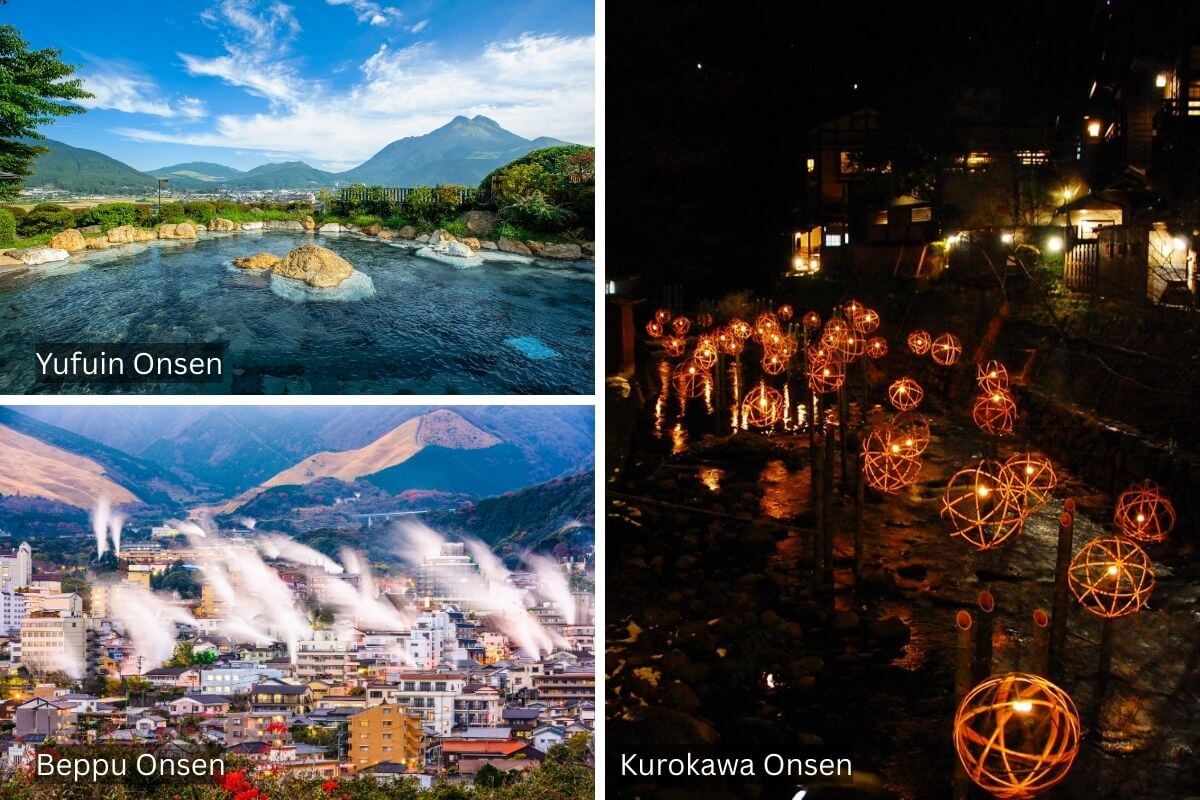
1. Beppu Onsen (Oita Prefecture)
Beppu is Japan’s hot spring capital, with the largest number of hot spring sources in the country. It’s famous for its variety—mud baths, sand baths, steam baths, and more. Be sure to visit the “Hells of Beppu” (Jigoku Meguri), a collection of colorful hot spring pools that are for viewing, not bathing.
Highlight: Try the unique sand bath, where you’re buried in naturally heated sand that relaxes your body from head to toe.
2. Yufuin Onsen (Oita Prefecture)
Just a short train ride from Beppu, Yufuin is a more laid-back onsen town surrounded by mountains, including the iconic Mount Yufu. It’s known for its charming streets filled with art museums, cafes, and boutique shops. Many ryokan here offer private open-air baths with spectacular mountain views.
Highlight: Soak in an outdoor bath while gazing at Mount Yufu—perfect for photography and relaxation.
3. Kurokawa Onsen (Kumamoto Prefecture)
Kurokawa is one of Japan’s most picturesque hot spring towns, with a rustic, traditional atmosphere. The town is surrounded by lush mountains, and its baths blend seamlessly with nature. Visitors can purchase an onsen-hopping pass (Nyuto Tegata) that lets you try different outdoor baths around the town.
Highlight: Experience “rotenburo” (outdoor baths) in riverside or forest settings—especially magical in autumn and winter.
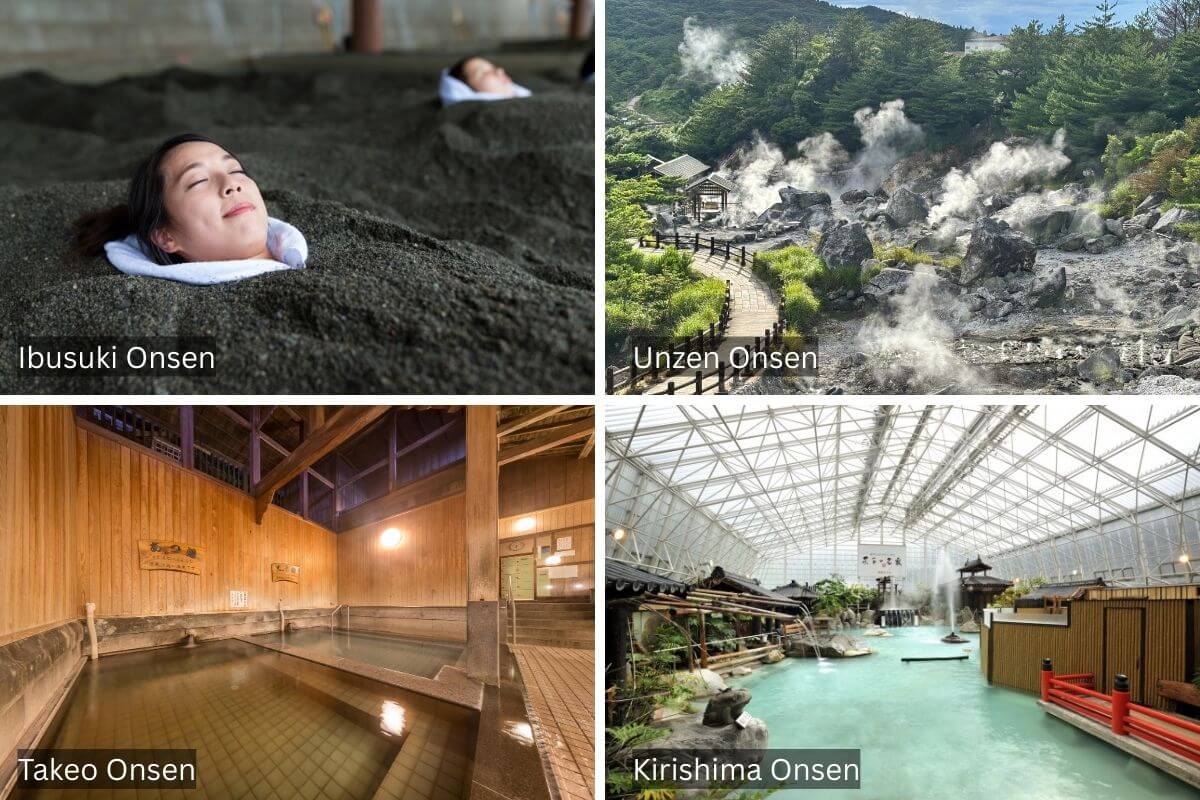
4. Ibusuki Onsen (Kagoshima Prefecture)
Located at the southern tip of Kyushu, Ibusuki is famous for its natural sand baths. Here, you lie down on the beach and get buried in warm volcanic sand, which improves circulation and detoxifies the body. Afterward, you can rinse off and soak in a traditional hot spring.
Highlight: The sand bath experience is unique to Ibusuki—you won’t find it anywhere else in Japan.
5. Unzen Onsen (Nagasaki Prefecture)
Unzen is located in the Unzen-Amakusa National Park, surrounded by volcanic landscapes and sulfuric hot spring fields. It was one of Japan’s first resort areas developed for international visitors in the Meiji era. The water here is acidic and said to have antibacterial properties.
Highlight: Walk through the steaming “Unzen Jigoku” (Unzen Hell Valley) before relaxing in a mineral-rich bath.
6. Takeo & Ureshino Onsen (Saga Prefecture)
These two neighboring onsen towns are famous for their “skin-beautifying waters.” Ureshino Onsen is especially known for its tea culture, and you can even enjoy a unique bath infused with local green tea. Takeo Onsen has a history of over 1,300 years and features beautiful traditional bathhouses.
Highlight: Try the silky, smooth waters that locals believe leave your skin soft and glowing.
7. Kirishima Onsen (Kagoshima Prefecture)
Nestled in the mountains of Kagoshima, Kirishima Onsen offers a variety of baths with strong mineral content, thanks to the volcanic activity of Mount Kirishima. The area is deeply connected to Japanese mythology—it’s said to be where the gods descended to earth. Many baths are located in natural settings, with outdoor rotenburo surrounded by forests and rivers.
Highlight: Soak in a rustic outdoor bath while breathing in crisp mountain air—an authentic, spiritual onsen experience.
Important Note About Tattoos in Onsen
In many Japanese onsen, tattoos are traditionally associated with organized crime, and some facilities still prohibit guests with tattoos. Rules are slowly changing, especially in tourist areas, but policies vary depending on the location.
👉 If you have tattoos, always check in advance with the onsen or ryokan. Some may provide private baths or allow you to use sticker covers to hide tattoos.
Final Thoughts
Kyushu isn’t just another onsen destination—it’s the heart of Japan’s hot spring culture. With its volcanic energy, diverse bathing styles, and incredible scenery, it offers experiences you can’t find anywhere else.
Whether you’re bathing in the mud pools of Beppu, the rustic riverside baths of Kurokawa, the sand baths of Ibusuki, or the mountain hideaways of Kirishima, you’ll discover why Kyushu is a true onsen paradise.
So next time you’re planning a Japan trip, don’t just stop at Tokyo or Kyoto—head south to Kyushu and soak your way into relaxation.
♨️ Dreaming of a soothing Kyushu onsen escape but not sure where to start? 🌋
I can help plan the perfect trip! From guiding you to the best hot spring towns like Beppu, Yufuin, Kurokawa, and Kirishima, to arranging nearby cultural experiences, scenic drives, and even cozy ryokan stays—I’ll coordinate everything for you. That way, you can simply relax, soak in healing waters, and enjoy Kyushu’s unique charm without worrying about the details.